
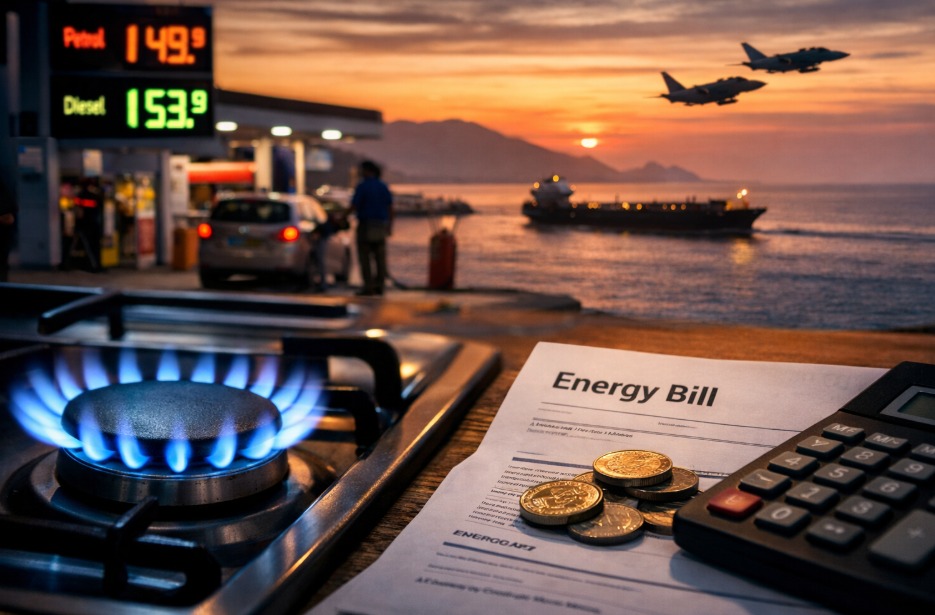
Household energy costs in Britain may increase sharply later this year after escalating tensions in the Middle East sent global gas and oil prices soaring. Analysts warn that the conflict involving Iran has already pushed the UK gas market to its highest level in three years, raising the prospect of higher bills for millions of households.
Household Energy Bills Forecast to Reach £1,800
Energy consultancy Cornwall Insight predicts that the average combined gas and electricity bill in Great Britain could rise to around £1,800 per year from July, an increase of roughly £160 annually.
The projected rise reflects a 10% jump in household energy costs, triggered by a surge in wholesale gas prices following the recent US–Israeli strike on Iran. In response, Tehran has reportedly halted oil and gas shipments through the Strait of Hormuz, one of the world’s most critical energy supply routes.
The UK’s domestic energy price cap, set by regulator Ofgem, currently fixes the typical annual bill at £1,641 between April and July. That represents a £117 reduction compared with the January–March cap, though it falls short of the £150 cut promised by Chancellor Rachel Reeves in last year’s autumn budget.
Ofgem will reassess supplier costs before setting the cap for the next quarter, meaning recent spikes in global energy markets could quickly feed through to consumer bills.
Global Tensions Already Affecting Fuel Prices
The impact of the Middle East crisis is already being felt at petrol stations across the UK.
Motorists have seen petrol prices rise by around 2.5p per litre since Saturday, while diesel has increased by more than 3p per litre, following a climb in global oil prices above $81 per barrel.
Energy analysts say the UK is particularly exposed to these fluctuations because of its heavy reliance on natural gas for electricity generation and relatively limited gas storage capacity compared with many European nations.
Ofgem: Too Early to Predict Full Impact
Jonathan Brearley, chief executive of Ofgem, told MPs that it remains too early to determine how high bills could climb, as much will depend on how long wholesale energy prices remain elevated.
About 20% of global oil supplies and roughly one-fifth of seaborne gas shipments pass through the Strait of Hormuz, making the waterway vital to global energy markets.
Brearley warned that a prolonged closure would place “significant upward pressure” on energy prices. However, he added that the UK is in a stronger position than during the 2022 energy crisis triggered by Russia’s invasion of Ukraine, partly due to more diversified gas supply sources.
Government Push for Energy Security
Energy Secretary Ed Miliband said the latest developments underline the UK’s vulnerability to international fossil fuel markets.
He argued that the long-term solution lies in accelerating the transition towards domestic renewable power.
“Conflict in the Middle East is yet another reminder that the only route to energy security and sovereignty for the UK is to reduce our dependence on fossil fuel markets,” Miliband said. “We need clean, home-grown power whose prices we control.”
He also rejected claims from Conservative leader Kemi Badenoch that issuing new licences for North Sea oil and gas production would significantly reduce household bills. According to Miliband, oil and gas extracted in the North Sea are still sold on global markets, meaning additional production would not directly lower consumer prices.
North Sea Policy Under Review
Chancellor Rachel Reeves met North Sea energy executives on Wednesday to discuss the turmoil in global energy markets.
Before the escalation in Iran, many industry figures expected the chancellor to announce changes to the Energy Profits Levy, commonly referred to as the North Sea windfall tax, during her spring fiscal statement.
A government source said Reeves remains committed to eventually ending the levy but indicated that the unfolding Middle East crisis has complicated the timing of any policy changes.
UK More Exposed Than Some European Neighbours
Market analysts warn that the UK’s energy system remains vulnerable to sudden global price shocks.
Andreas Schroeder, head of gas analytics at ICIS, said one key difference between Britain and continental Europe is gas storage capacity.
Central European countries maintain significantly larger reserves, allowing them to cushion short-term disruptions in supply. Britain, by contrast, has relatively limited storage and relies heavily on pipeline gas from Norway and imports of liquefied natural gas (LNG).
Tom Marzec-Manser, a director at consultancy Wood Mackenzie, also noted that the closure of the UK’s last coal-fired power stations means Britain cannot easily switch to coal generation when gas prices surge, unlike some European countries.
Renewables Seen as Long-Term Protection
Energy analysts say the latest crisis strengthens the case for expanding domestic renewable power such as wind and solar.
Craig Lowrey, principal consultant at Cornwall Insight, said geopolitical events demonstrate the risks of relying heavily on imported gas.
“Reducing the UK’s exposure to volatile global gas markets is the most durable way to shield households from future price shocks,” he said.
Outlook for Households
For millions of UK households still grappling with the aftermath of recent energy crises, the possibility of another price rise will be a concern. Much now depends on whether tensions in the Middle East ease or escalate further in the coming months.
If wholesale energy prices remain elevated, Britain’s next energy price cap adjustment could bring higher bills just as households enter the second half of the year.

Thomas Hawthorne is a contributor to Nintendo-power.com, covering a broad range of topics including news, business, technology, entertainment, lifestyle, and current affairs. He focuses on delivering clear, accurate, and accessible reporting that helps readers stay informed about important developments and emerging trends. With a reader-first approach, Thomas aims to provide useful context, balanced insights, and engaging stories that reflect the issues, events, and interests shaping everyday life.