
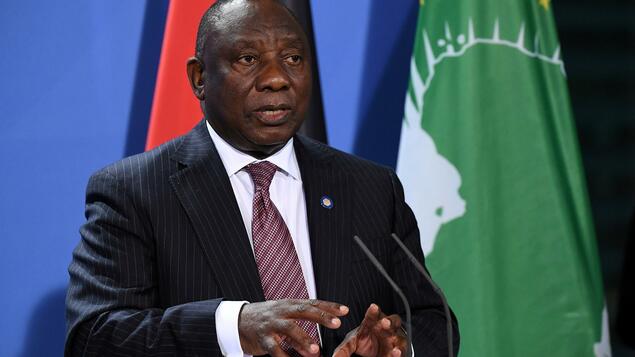
South African President Cyril Ramaphosa has criticized the travel restrictions of several states against South African countries as unfair. “These restrictions are unjustified discrimination against our country and our fraternal states,” Ramaphosa said in a televised address on Sunday evening. This is a clear departure from the declaration made at the G20 summit in Rome to help underdeveloped states deal with the impact of the epidemic on their economies.
These restrictions only add to the damage that South Africa’s economies have already suffered, especially in tourism, he appealed to those states that have adopted travel restrictions to reconsider their decision “before they cause more damage”. Instead, it should help poor countries produce vaccines.
[Wenn Sie alle aktuellen Entwicklungen zur Coronavirus-Pandemie live auf Ihr Handy haben wollen, empfehlen wir Ihnen unsere App, die Sie hier für Apple- und Android-Geräte herunterladen können.]
Vaccination, negative PCR tests before flights and experience have shown that travel is safer if the aircraft has mouth and nose masks. There is no scientific basis for travel restrictions, Ramaphosa said. “They continue to harm the economies of affected countries and undermine their ability to respond and recover from epidemics.”
In addition to other countries, after the discovery of the new Omigran variant, the federal government severely restricted entry from eight countries in South Africa. South Africa, Namibia, Zimbabwe, Botswana, Mozambique, Eswatini, Malawi and Lesotho have been classified as areas with the virus since Sunday. Airlines are basically allowed to take German citizens or people living in Germany from there to Germany. (dpa)

Beatrice Ashford is a contributor at Nintendo-power.com, covering a wide range of topics including news, politics, business, technology, sport, entertainment, and lifestyle. She focuses on delivering clear, balanced reporting and useful information that helps readers stay informed about current events and emerging developments. Her work highlights stories that matter to everyday audiences, with an emphasis on accuracy, relevance, and accessible journalism that keeps readers connected to the issues shaping the world around them.