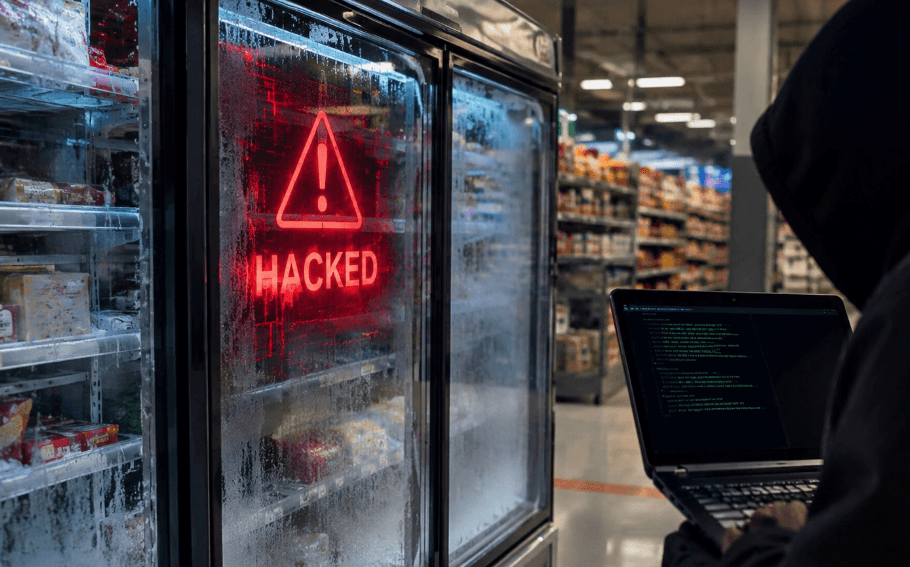
A series of cyberattacks targeting supermarket refrigeration systems across Europe has exposed growing security risks associated with internet-connected technology. The incidents have raised concerns about the vulnerability of everyday smart appliances and essential services, including healthcare, energy and water supplies.
European Supermarkets Hit by Refrigeration Cyberattacks
Hackers reportedly gained control of refrigeration systems at hundreds of European supermarkets in two separate incidents within a month, causing fires and food losses worth millions of euros.
On 11 and 12 October 2026, attackers manipulated refrigeration equipment at approximately 700 French stores, raising temperatures to as high as 50°C.
A second wave of suspected attacks on 2 November affected supermarkets and food businesses in at least nine countries, including Belgium, Estonia, Finland, Ireland, Italy, Luxembourg, the Netherlands, Portugal and Sweden.
French authorities attributed the October attack to Shahid Kaveh, a cyberunit associated with Iran’s Islamic Revolutionary Guard Corps. The perpetrators of the November incidents remain unidentified.
How Hackers Gain Access to Smart Refrigeration Systems
Commercial refrigeration equipment is frequently managed through centralised control systems connected to the internet, allowing technicians to monitor temperatures and perform maintenance remotely.
However, inadequate cybersecurity measures can leave these systems vulnerable.
According to Vincent Strubel, head of France’s National Cybersecurity Agency, several weaknesses contributed to the attacks.
Three Major Security Vulnerabilities
-
Exposed internet connections: Refrigeration controllers were accessible online without adequate protection.
-
Weak passwords: Some equipment relied on default or easily compromised login credentials.
-
Outdated technology: Older devices lacked essential security updates.
Attackers reportedly identified vulnerable equipment using Shodan, a search engine that identifies internet-connected devices.
Once inside, they exploited built-in defrost functions to increase refrigeration temperatures.
The implications extend beyond supermarkets. Similar technology is used in pharmacies, hospitals and laboratories to preserve vaccines, medicines and hazardous materials.
Smart Homes Face Increasing Cybersecurity Threats
Internet-connected household appliances present comparable risks.
According to Kepios’s Digital 2027 Global Overview Report, approximately 21 billion short-range connected devices and 5.4 billion long-range connected devices are in use worldwide.
Research from Parks Associates indicates that American households with internet access now have approximately 18 connected devices on average.
Routers, Smart Televisions and Robot Vacuums at Risk
Home routers are particularly attractive targets because they remain connected to the internet continuously.
In April 2026, the UK’s National Cyber Security Centre (NCSC) warned that hackers linked to Russia’s GRU military intelligence had compromised vulnerable routers.
Attackers reportedly altered Domain Name System settings to redirect users towards fraudulent websites designed to capture passwords and personal information.
Smart televisions also face security concerns. Research published in June suggested that vulnerabilities affecting applications on LG and Samsung televisions could allow unauthorised users to exploit household internet connections.
Meanwhile, a programmer reportedly discovered vulnerabilities affecting nearly 7,000 DJI Romo robotic vacuum cleaners.
The weaknesses allegedly allowed access to cameras, microphones and household floor plans, highlighting the privacy risks associated with connected domestic equipment.
Cyberattacks Threaten Essential Public Services
Cybersecurity vulnerabilities are not limited to consumer electronics.
Energy infrastructure, water treatment facilities, financial institutions and healthcare organisations increasingly depend on network-connected industrial systems.
In July 2026, a cyberattack targeted more than 30 community water systems in Minnesota, United States.
Authorities suspected Iran-aligned hackers, while American cybersecurity agencies warned of attacks affecting water infrastructure across multiple states.
During the same month, an attack attributed to Iran-linked hackers reportedly forced a small British power station offline for four days.
The incident demonstrated the potential consequences of cyberattacks against UK energy infrastructure.
Financial institutions have also suffered significant breaches. Between September and October, attackers reportedly compromised personal information belonging to approximately 68,000 customers across seven South Korean financial companies.
Government Institutions Remain Major Cyberattack Targets
Data compiled by the European Repository of Cyber Incidents recorded 4,932 politically significant cyber incidents between January 2000 and November 2026.
The annual number peaked at 795 in 2024, while approximately two-thirds of recorded incidents occurred from 2022 onwards.
Government institutions accounted for nearly 40% of identified targets.
Critical infrastructure was the second most frequently targeted category, particularly healthcare, finance, telecommunications, transport and energy.
These figures cover politically significant incidents rather than the full range of cybercrime affecting businesses and individuals.
How UK Households Can Improve Cybersecurity
The NCSC recommends several practical measures to reduce exposure to cyber threats.
Five Essential Cybersecurity Precautions
-
Change default passwords: Use strong, unique passwords for routers and connected appliances.
-
Install security updates: Keep device software and firmware updated.
-
Secure home networks: Enable appropriate router security settings and encryption.
-
Disable unnecessary features: Switch off remote access and other functions when they are not required.
-
Replace unsupported equipment: Avoid devices that no longer receive security patches.
The UK Government’s Be Ready campaign also encourages households to maintain emergency supplies sufficient for three days, including drinking water, food, medication, cash and torches.
Cybersecurity Becomes Essential as Digital Connectivity Expands
The European supermarket attacks illustrate how weaknesses in seemingly ordinary equipment can disrupt businesses and essential services.
As homes, industries and public infrastructure become increasingly connected, effective cybersecurity measures will remain crucial to protecting personal information, maintaining essential operations and reducing the consequences of future attacks.

Thomas Hawthorne is a contributor to Nintendo-power.com, covering a broad range of topics including news, business, technology, entertainment, lifestyle, and current affairs. He focuses on delivering clear, accurate, and accessible reporting that helps readers stay informed about important developments and emerging trends. With a reader-first approach, Thomas aims to provide useful context, balanced insights, and engaging stories that reflect the issues, events, and interests shaping everyday life.