
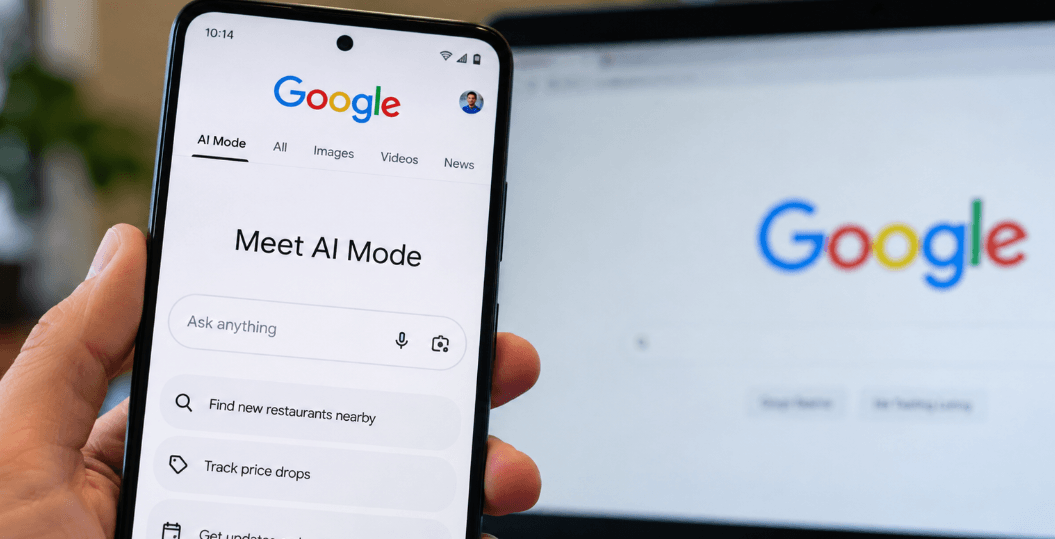
Google is rolling out its AI Mode information monitoring feature to users globally, widening access to a tool that can repeatedly check the web for updates on topics people want to follow. The capability, previously available to paying subscribers, allows users to tell Google Search what information to watch and receive updates as new details emerge.
Search will also suggest monitoring tasks while people are carrying out relevant searches, potentially making the feature useful for frequently changing topics such as local events, restaurant openings, product availability and price reductions.
Google AI Mode Can Monitor Changing Information
Robby Stein, Google’s vice-president of product for Search, announced the wider rollout on Monday. According to Stein, Google AI Ultra and Pro subscribers had already been able to use the monitoring capability before its expansion to the wider public.
The examples highlighted by Google largely focus on local discovery and shopping, areas where information can change quickly and users may otherwise need to conduct the same searches repeatedly.
Users Can Tell Search What to Watch
In a demonstration accompanying the announcement, a user asks AI Mode to identify weekend pop-up events. The service responds that it has set up a task to provide updates about vintage markets and pop-up events in Austin, Texas.
Google then specifies the types of activities it will monitor, including flea markets, stoop sales and block parties.
Explaining how the system works, Stein wrote:
“Just tell AI Mode exactly what to look for & Search will continuously check across changing info on the web like sites, forums and social posts, our real-time data sources, and Shopping Graph of 60B+ products, so you can stay up-to-date with fresh info. And it’ll even suggest tasks when you’re searching so you can get the latest info when it happens.”
The approach effectively turns certain Google searches into continuing monitoring tasks rather than one-off queries.
Feature Builds on Google’s Earlier AI Search Plans
Google first outlined its plans for information agents at its I/O conference in May 2026. At the time, the company said the technology would initially become available to AI Pro and Ultra subscribers during the summer.
A June rollout provided access to Ultra subscribers across AI Mode languages and markets.
The latest announcement uses the term “info monitoring capabilities” rather than “information agents”. Google describes the expansion as global but has not provided a detailed list of supported languages in the latest announcement or specified when Pro subscribers first gained access.
Monitoring Targets Local Search and Shopping Updates
Google’s examples demonstrate how information monitoring could be used for subjects that people regularly revisit.
These include finding newly opened restaurants or nearby pop-up events, discovering local activities for children during holidays, tracking products that return to stock and watching for price reductions.
For UK users, the same concept could potentially reduce the need for repeated searches when following changing local events, retail availability or other time-sensitive information.
Questions Remain Over Website Traffic and Sources
The development could also have implications for businesses, retailers and publishers that rely on Google Search for online visibility.
In June, Stein said information-agent updates would include links to websites. However, the latest announcement does not specifically discuss links or explain how Google selects the sources used to generate monitoring updates.
That leaves uncertainty over how frequently websites belonging to local businesses, retailers and publishers might appear in these automated updates, as well as how much referral traffic the feature could generate.
Google’s monitoring system is particularly notable because it can draw on changing information from websites, forums, social media posts, real-time data sources and the company’s Shopping Graph, which Stein said contains more than 60 billion products.
Google Signals Further Development of Search Agents
Stein directed users to the Google app to try the monitoring capability and indicated that further developments are planned, adding: “Lots more to come!”
Once the feature becomes available on an account, users can create monitoring tasks within the Google app and assess how updates are presented as fresh information appears.
The broader rollout represents another step in Google’s effort to make AI Mode capable of handling ongoing tasks rather than simply responding to individual searches. At I/O, Google described a wider vision in which users would be able to create and manage Search agents for different purposes, stating: “We’re starting with information agents.”
As information monitoring becomes available globally, its impact will depend partly on how effectively Google identifies reliable and timely sources — and how prominently those original sources are represented in the resulting updates.

Thomas Hawthorne is a contributor to Nintendo-power.com, covering a broad range of topics including news, business, technology, entertainment, lifestyle, and current affairs. He focuses on delivering clear, accurate, and accessible reporting that helps readers stay informed about important developments and emerging trends. With a reader-first approach, Thomas aims to provide useful context, balanced insights, and engaging stories that reflect the issues, events, and interests shaping everyday life.