
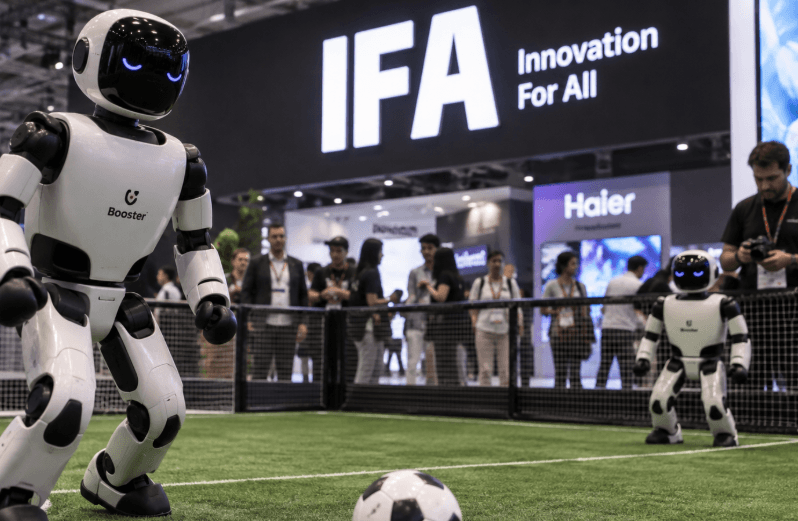
Artificial intelligence, connected appliances and increasingly autonomous household technology are taking centre stage at IFA 2026 in Berlin, offering a glimpse of how homes could change over the coming years.
Under the theme “The Future is Now”, the consumer electronics and home appliances trade fair brings together more than 1,900 brands from 49 countries. This year, manufacturers are increasingly looking beyond the traditional “smart home” towards an “intelligent home” capable of learning routines, adapting to users and anticipating their needs.
AI Appliances Aim to Make Everyday Life Simpler
Making household chores easier has long been one of the promises of smart-home technology. At IFA 2026, manufacturers are taking that concept further by developing appliances that can help with both physical tasks and everyday decision-making.
Haier, for example, is demonstrating a washing machine equipped with an integrated camera and artificial intelligence. The appliance can identify items placed inside the drum and warn users about potential laundry mistakes, such as a stray red sock mixed with white clothing.
The technology is designed to reduce the amount of attention required for routine household jobs while potentially preventing common mishaps.
AI Moves Into the Kitchen
Cooking is another area where manufacturers see significant potential for artificial intelligence.
Neil Tunstall, CEO of Haier Europe, said appliances are increasingly able to identify what has been placed inside them and automatically adjust cooking settings. Such features could prove useful for people who are unsure about temperatures, timings or the correct programme for a particular dish.
“The product now will do that for you. And that hopefully means then that we can actually enjoy eating much more at home,” Tunstall said.
“We are talking less about products, much more about experiences, we’re talking less about consumers trying to think about things and the products and the system itself thinking, making life much, much smarter,” he added.
Connected Technology Could Help Organise Family Life
US-based Cozyla is focusing on another challenge: coordinating increasingly busy households.
Its IFA demonstration shows how AI and connected displays could bring together family calendars, work commitments, meal planning and everyday household responsibilities.
Visitors are taken through a simulated day inside a connected home. Digital calendars and interactive displays coordinate schedules, while the kitchen system can scan a recipe and help organise a meal.
In the living room, the technology can be used to assign tasks and coordinate plans between household members before supporting the family’s bedtime routine.
For UK households juggling work, school and other commitments, such systems illustrate how smart-home technology could increasingly operate as a central organiser rather than simply a collection of internet-connected appliances.
Smart Beds Bring Connected Technology Into the Bedroom
The push towards intelligent homes does not end when people go to sleep.
Hong Kong-based BestQi is displaying its AMADA Smart Adaptive Sleeping System, which combines an adjustable bed with a mattress using sound and vibrations. Settings can be managed through a smartphone app.
Each side of the bed can be controlled independently, allowing two users to select different positions. Massage functions, vibration intensity and programmes for sleeping, relaxing and reading can also be adjusted.
Massage Chairs Monitor Biometric Data
South Korean company Bodyfriend is also combining relaxation technology with connected health-related features.
Its Quantum Beauty Capsule incorporates a full-body massage chair alongside LED modules designed for the face and scalp.
Another product, the Davinci AI, includes a fingertip PPG sensor capable of measuring biometric information such as heart rate, heart rate variability and blood oxygen saturation.
According to the company, changes in these measurements can be used to provide information about a user’s physical condition, stress levels and recovery.
Home Entertainment Becomes More Connected
Entertainment remains another major part of the future-home concept.
Televisions have grown larger in recent years, while improvements in picture quality and home audio have transformed living rooms. At IFA 2026, however, manufacturers are increasingly concentrating on how separate entertainment products can work together.
TCL is among the major exhibitors demonstrating this approach. Its displays include a gaming setup that integrates screens, audio equipment and other connected devices into a single entertainment environment.
The broader trend mirrors developments elsewhere in the home: instead of consumers operating individual products independently, manufacturers increasingly envisage devices communicating with one another and responding to household routines.
From Smart Homes to Intelligent Homes
IFA 2026 suggests the next generation of household technology will be defined less by individual gadgets and more by how effectively devices work together.
AI-powered washing machines, connected kitchens, digital household organisers, adaptive beds and integrated entertainment systems all point towards homes capable of making more decisions automatically.
Whether consumers embrace that level of automation will depend on factors including affordability, reliability, privacy and genuine usefulness. But the technology on display in Berlin shows that manufacturers are already moving towards homes designed not merely to respond to their occupants, but increasingly to understand and anticipate them.

Thomas Hawthorne is a contributor to Nintendo-power.com, covering a broad range of topics including news, business, technology, entertainment, lifestyle, and current affairs. He focuses on delivering clear, accurate, and accessible reporting that helps readers stay informed about important developments and emerging trends. With a reader-first approach, Thomas aims to provide useful context, balanced insights, and engaging stories that reflect the issues, events, and interests shaping everyday life.