

After the online ad, Vivaldi handles the cookie consent banners. The web browser has been updated to Windows, MacOS, Linux, and Android, and now has the option to block conversations displayed by websites asking for your permission before contaminating your computer with cookies.
Download Vivaldi for Windows (Free)
Download Vivaldi for MacOS (Free)
Download Vivaldi for Linux (Free)
Download Vivaldi for Android (Free)
This option is integrated directly into Vivaldi’s ad blocker’s source management module. Go to and find it on Android Manage Settings> Tracker & Ad Block> Ad block sources.

In the desktop version of the browser, the option is found Settings> Privacy> Manage Resources> Advertising Block Sources.
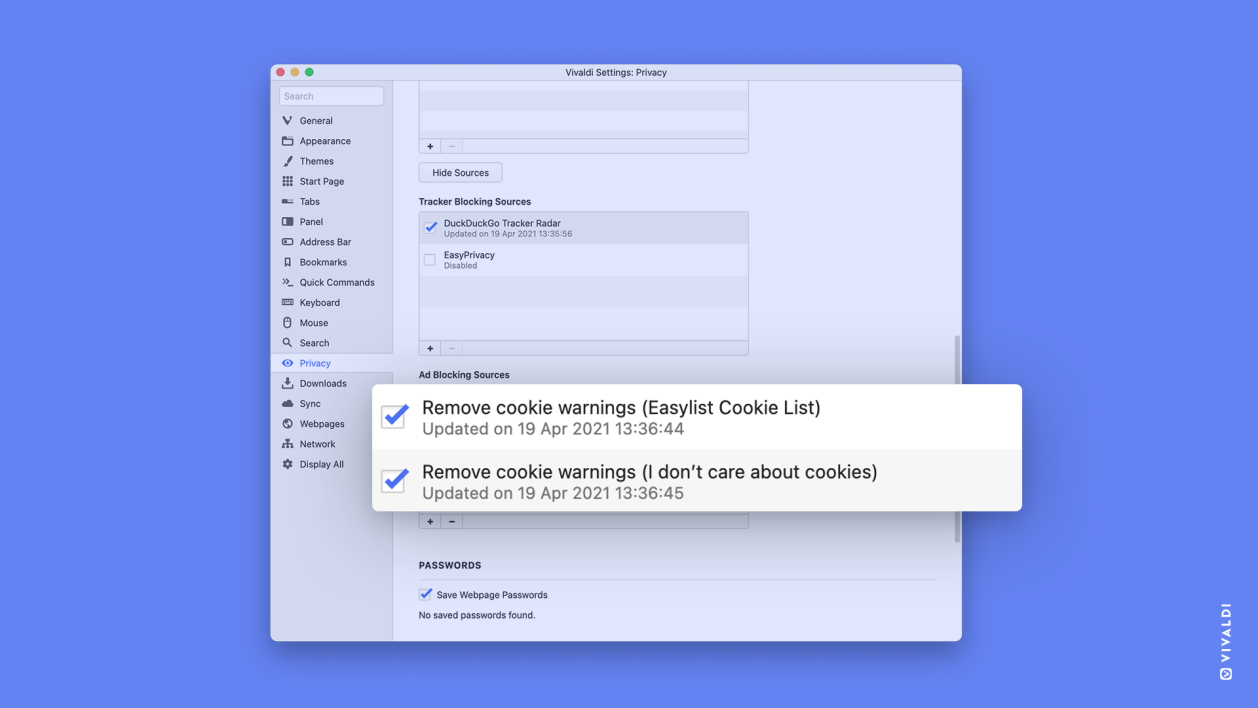
These cookie block blocks rely on two block lists, which may not always work because some websites have techniques to avoid this type of block. Also, enabling cookie alert blocking may prevent some websites from displaying in the browser.
As expected, the browser does not support FLoC, a new ad targeting technology recently launched by Google on Chromium, which Vivaldi relies on.

Beatrice Ashford is a contributor at Nintendo-power.com, covering a wide range of topics including news, politics, business, technology, sport, entertainment, and lifestyle. She focuses on delivering clear, balanced reporting and useful information that helps readers stay informed about current events and emerging developments. Her work highlights stories that matter to everyday audiences, with an emphasis on accuracy, relevance, and accessible journalism that keeps readers connected to the issues shaping the world around them.